Support Case Packager
Desktop tool that packages a complete support case — filtered controller logs and matching site video — from a single form submission.
Sole Developer & Owner · Feb 2026 – Apr 2026 · Team of 1 · 4 key work items · 4 evidence-backed
What I owned
Owned the system end-to-end: requirements with the support team, 4-component pipeline architecture with explicit failure-isolation semantics, Tkinter GUI + Python backend, SSH gateway and credential management, vendored open-source integration, and rollout to the CS team across 6 customer sites.
Key Work · 4
Architected a 4-component sequential pipeline (gateway lifecycle → folder creation → log extraction → video fetch) with explicit per-stream failure isolation.
▾In daily production use across 6 customer sites. Real cases have been packaged through partial failures (single missing log stream, video unavailable for a specific time window) and the support engineer still got the usable subset.
Built a single-form, click-only desktop GUI that replaced a manual SSH-and-archive-hunting workflow, and shipped it into daily use by Mujin's Customer Support team across 6 customer sites.
▾Adopted into daily production use by the Customer Support team before the internship ended, with no external training rolled out. The form itself was the documentation.
Designed an extensible log-stream registry so adding a new log type requires a single configuration entry, no pipeline code changes, and inherits rotated and gzip archive handling automatically.
▾The registry currently lists two streams. The extension point is documented in a code comment so the next engineer can extend it without reading the pipeline implementation.
Implemented ephemeral SSH port-forwards plus shutdown-handler and process-group cleanup so external resource handles always close. No zombie SSH processes, no leaked tunnels, even when a run is killed mid-execution.
▾Verified manually by killing the GUI mid-run. No orphan SSH processes remain, and no zombie accumulation observed across the support team's daily use.
Interfaces
| From | To | Type | Description |
|---|---|---|---|
| gui.py | window_logs.py | software | Threaded invocation of the backend pipeline on form submission. UI thread stays responsive while the backend runs. |
| window_logs.py | SSH Gateways | process | Detect, reuse, start, and shutdown-handler cleanup of SOCKS proxy tunnels. No persistent gateway state between runs. |
| window_logs.py | Deployed Controller | data | Time-windowed log fetching over SSH. Handles rotated archives and gzip decompression on-host. |
| window_logs.py | protect-archiver | software | Subprocess invocation of the vendored MIT-licensed NVR client. Communication via stdout and return code. |
| protect-archiver | Site Camera NVR | api | HTTPS API client routed through an ephemeral SSH port-forward. Tunnel lifetime scoped to the video download only. |
Documents
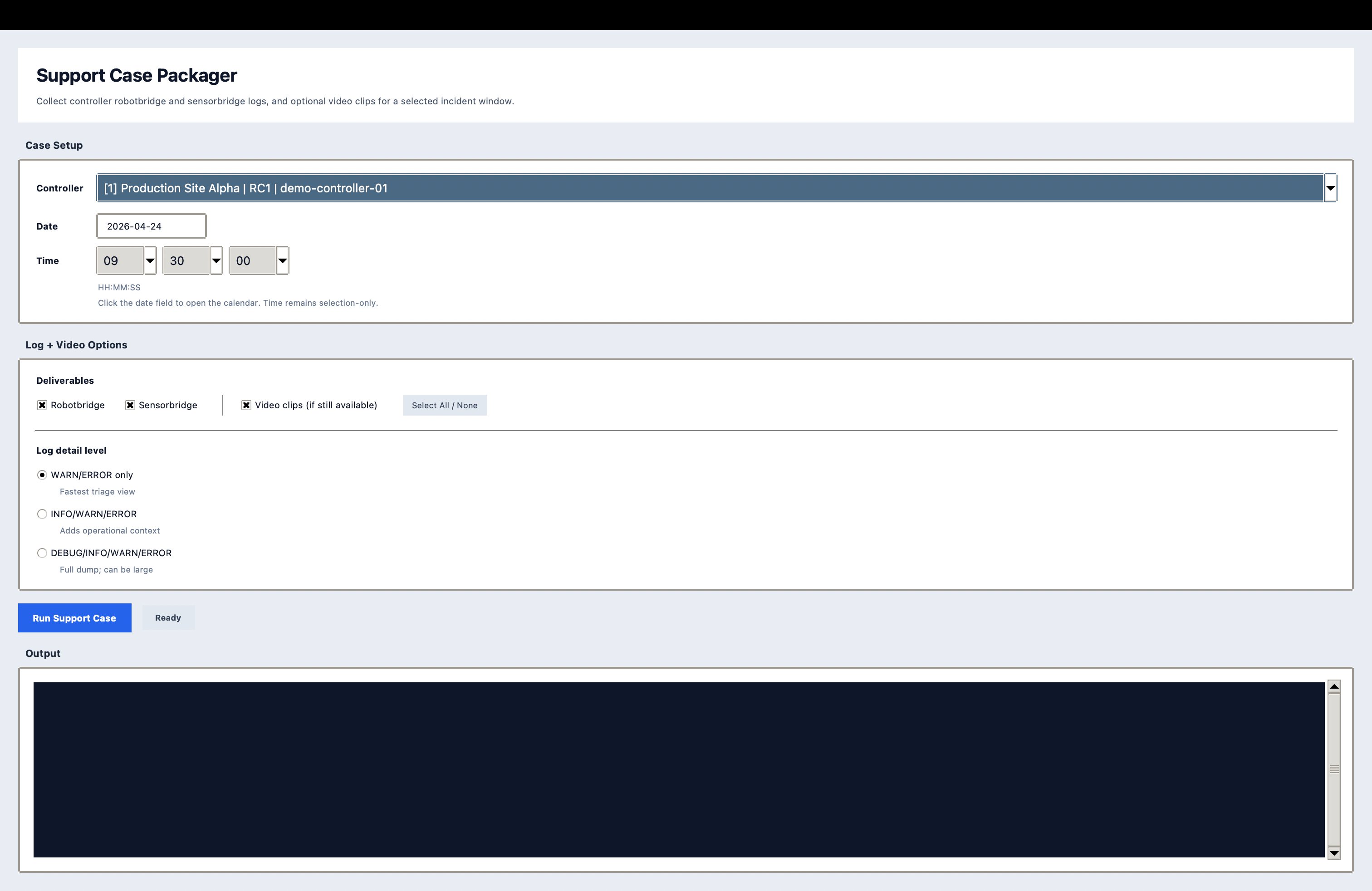
Click-only Tkinter form — controller, incident timestamp, deliverables, log detail level. Zero text entry anywhere.
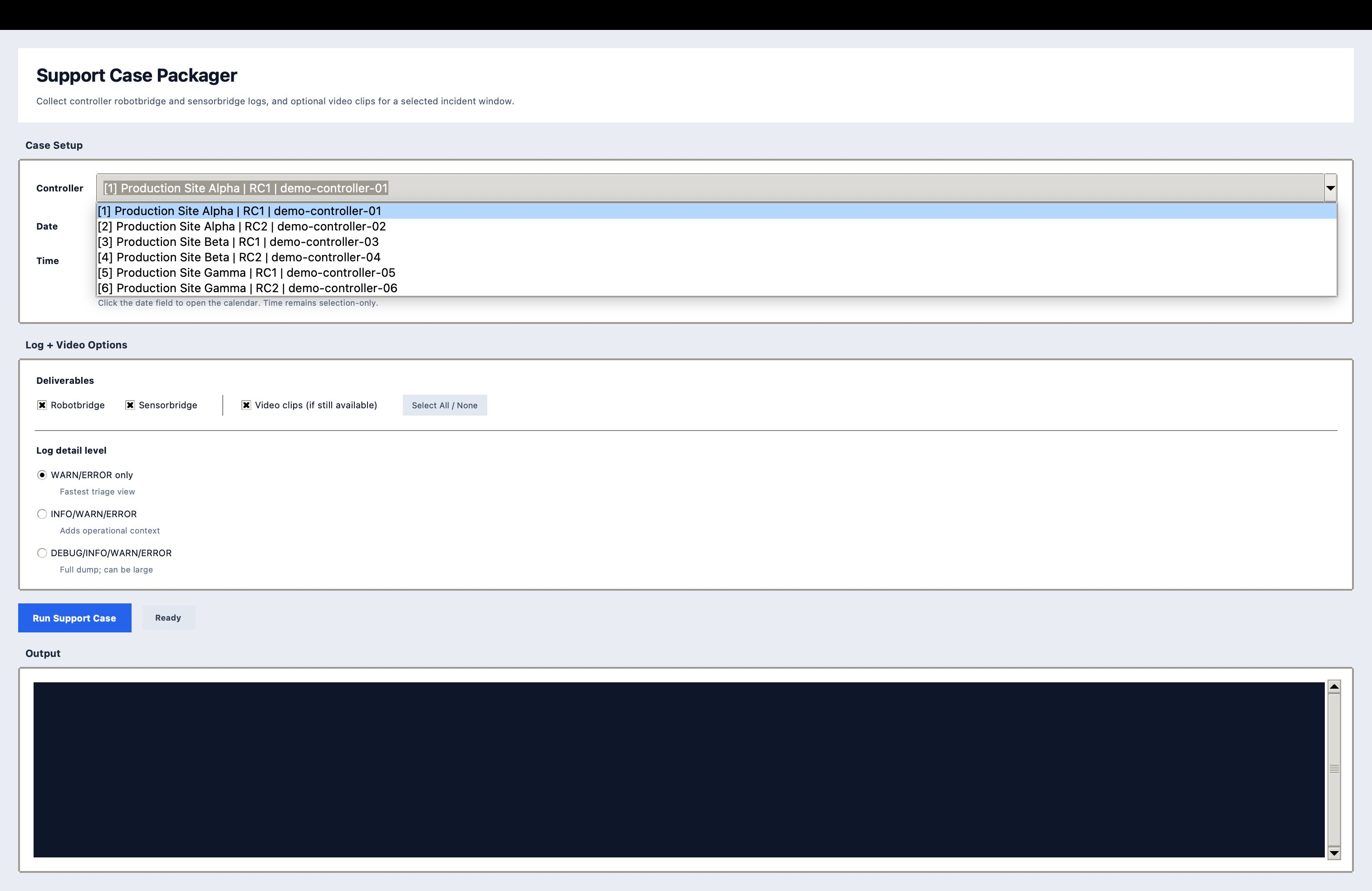
Sanitized view of the 6 customer-site controllers reachable through one form.
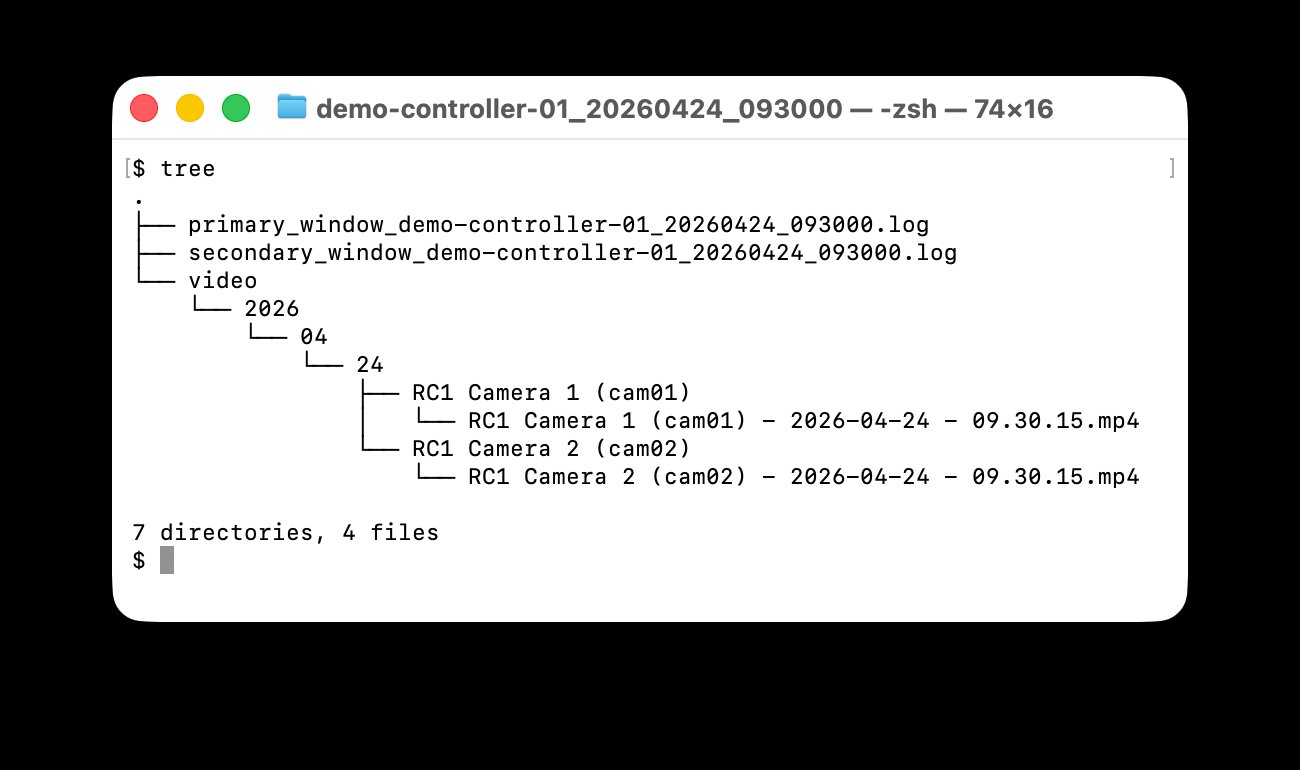
Sanitized view of the 6 customer-site controllers reachable through one form.
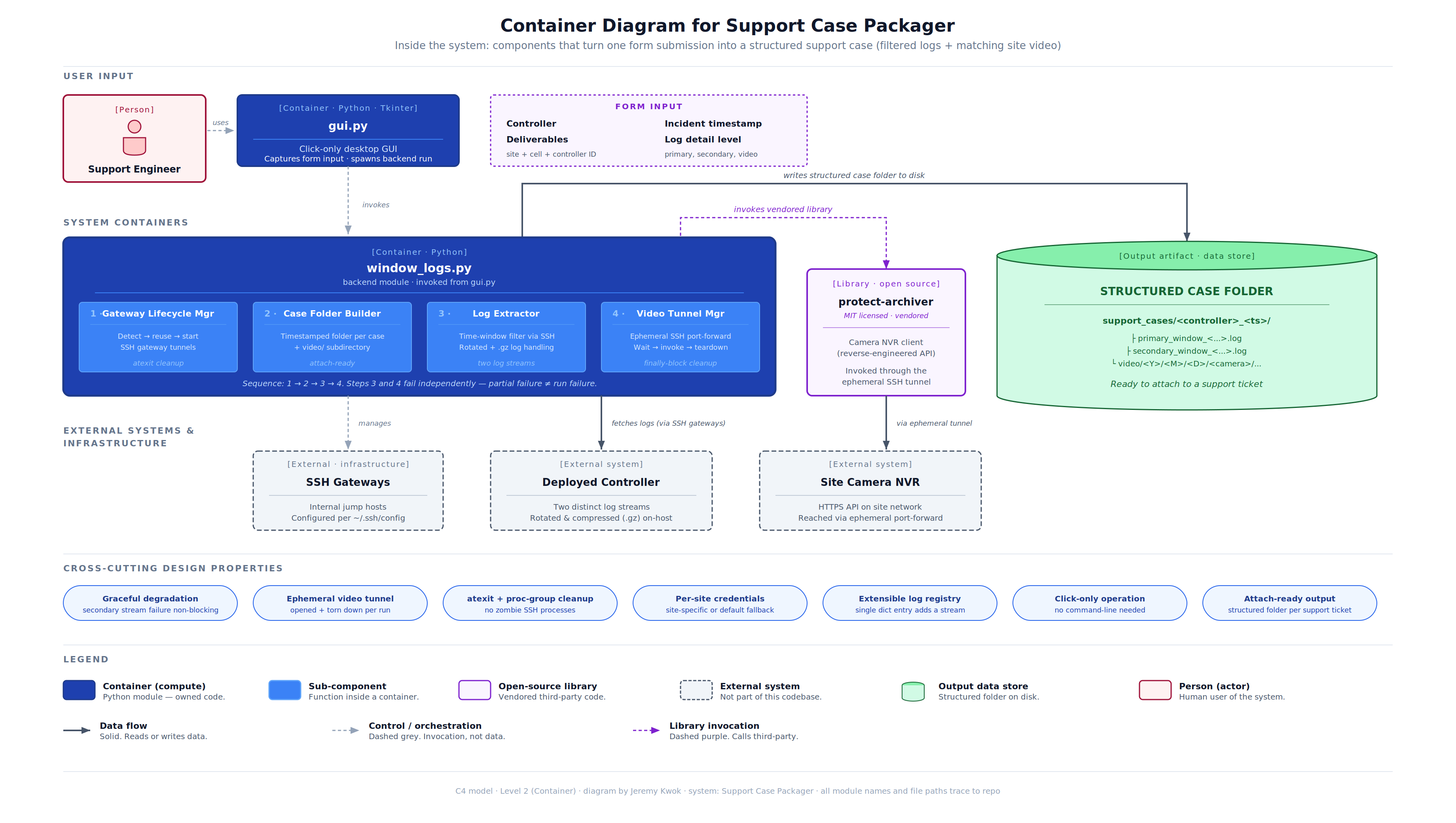
Architectural map: containers, sub-components, external systems, and cross-cutting design properties.
Limitations
- • Internal-only deployment, not a public-facing or clinical-grade product. Sanitization applied for portfolio (real customer site names, controller IDs, internal hostnames omitted from screenshots and the architecture diagram).
- • No automated test suite. Validation was iterative with the support team during development. v2 would add unit tests around the log-window filtering logic and integration tests around the gateway and tunnel lifecycle.
Lessons
- • A senior colleague flagged early that the tool should be operable without command-line knowledge. The target users were technically capable, but removing the typing tax shaped the form-only design from day one and meant new support engineers could pick it up without training. UX decisions made for "least technical user we could imagine" raised the floor for everyone.
- • Failure isolation needs explicit code-level commitment, not just the code happening to keep running. Making per-stream failure handling deliberate and surfacing the partial-failure case in the run summary was a small architectural commitment with high reliability payoff, and the kind of pattern that maps directly to fault-tolerant medical or industrial systems.
- • Iterate with the actual users, not your mental model of them. v1's controller dropdown was labeled with raw SSH connection strings. Watching a support engineer use it surfaced that they needed site + cell + controller ID. Thirty-minute rewrite, real friction removed.